
Shooting Positions: Why Bench Accuracy Doesn't Tell the Whole Story
Prone, seated, kneeling, standing. Terrain, fatigue, and familiarity shape what you can actually do with a rifle — and none of it shows up on a target.
This site contains information about firearms and firearm products. You must be 18 years of age or older to enter.
You must be at least 18 years old to view this website. Please check back when you meet this requirement.
Notes, guides, and updates from the shop.
Prone, seated, kneeling, standing. Terrain, fatigue, and familiarity shape what you can actually do with a rifle — and none of it shows up on a target.
More markings aren't automatically more capability. A clean MOA reticle gives useful references while preserving the view you need to spot your own impact.
Two rifles in the same cartridge can feel dramatically different. Weight, stock geometry, muzzle device, and fit all shape what you actually experience.
Rings, torque, height, eye relief. An unstable mount creates problems that look exactly like ammunition or barrel problems — and changing ammo won't fix them.
Handloading offers flexibility, not guaranteed superiority. Modern premium factory ammunition can deliver outstanding performance — and your time has a cost too.
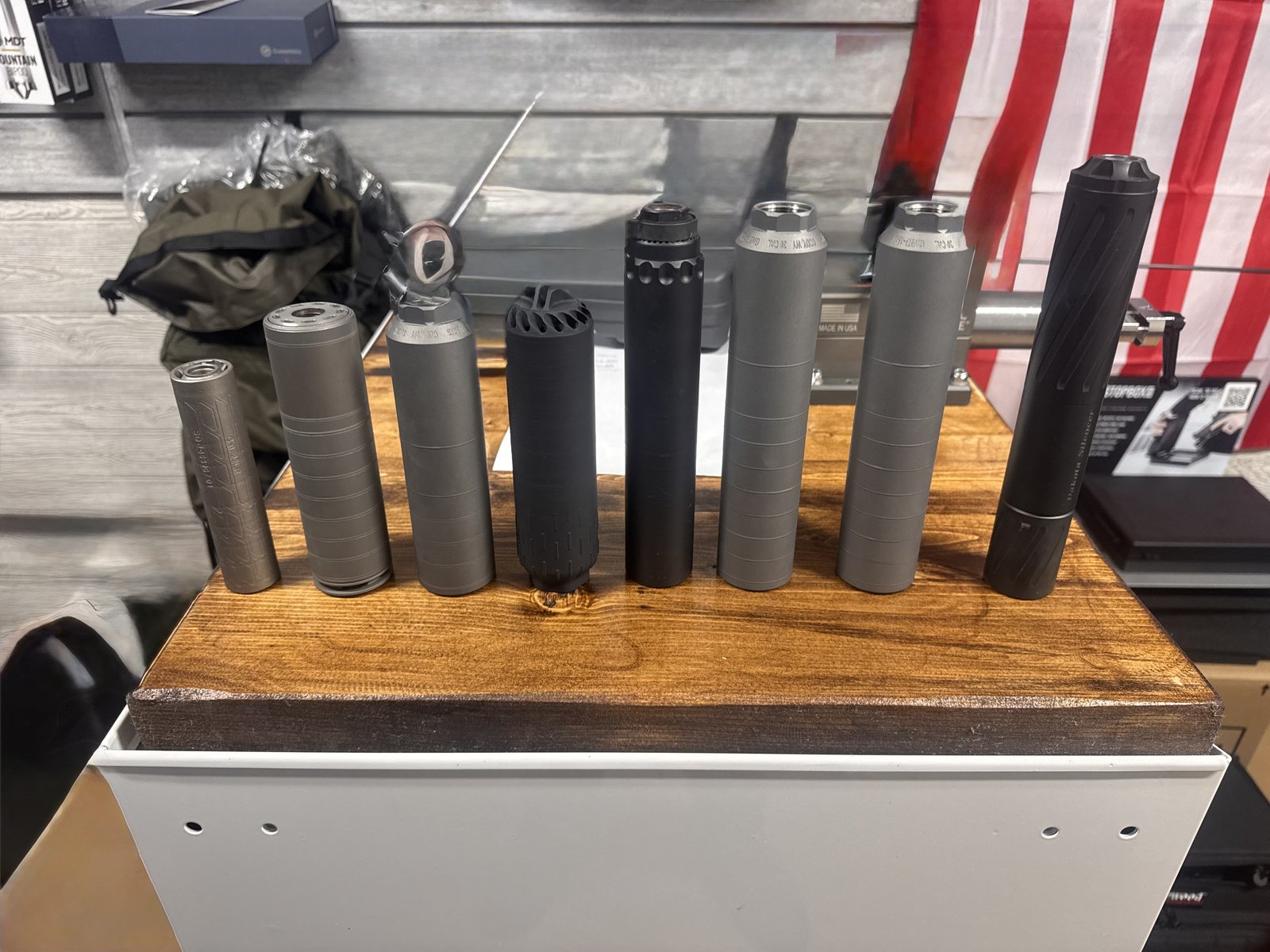
A brake manages recoil. A suppressor manages muzzle blast. Plus a third option many shooters miss — suppressor-compatible brakes that let you run both.
Weight, heat, stiffness, cost. Carbon saves weight; steel offers proven versatility. Neither material guarantees accuracy — start with what the rifle is for.
FFP holds stay consistent across magnification. SFP hold marks are calibrated at one specified power. Neither design establishes glass quality, tracking, or durability.
Daylight under the barrel on a bench doesn't prove clearance under load. What matters is whether unintended contact occurs in the positions the rifle actually gets used from.
A big top-end number looks impressive in a catalog. In the field, field of view, image stability, low-light performance, and mirage all matter more than the largest setting on the ring.
Twist rate deserves a place in the barrel conversation. Bullet length and shape, not weight alone, determine the spin a projectile needs — and faster isn't automatically better.
Suppressors changed the math on barrel length. Velocity, impact velocity, blast, balance, handling — work backward from the job instead of chasing one number.
The math is perfect. The inputs might not be. Velocity, zero, sight height, BC, atmospherics, range, scope tracking — verify them before you start truing bad information.
A ½-MOA guarantee tells you what the rifle can do — not what you and the rifle will do together. Mechanical precision is the starting point. Proven performance is the goal.
A lighter rifle is easier to carry. A heavier rifle is easier to shoot. The goal is finding the lightest rifle you can carry comfortably and shoot confidently.
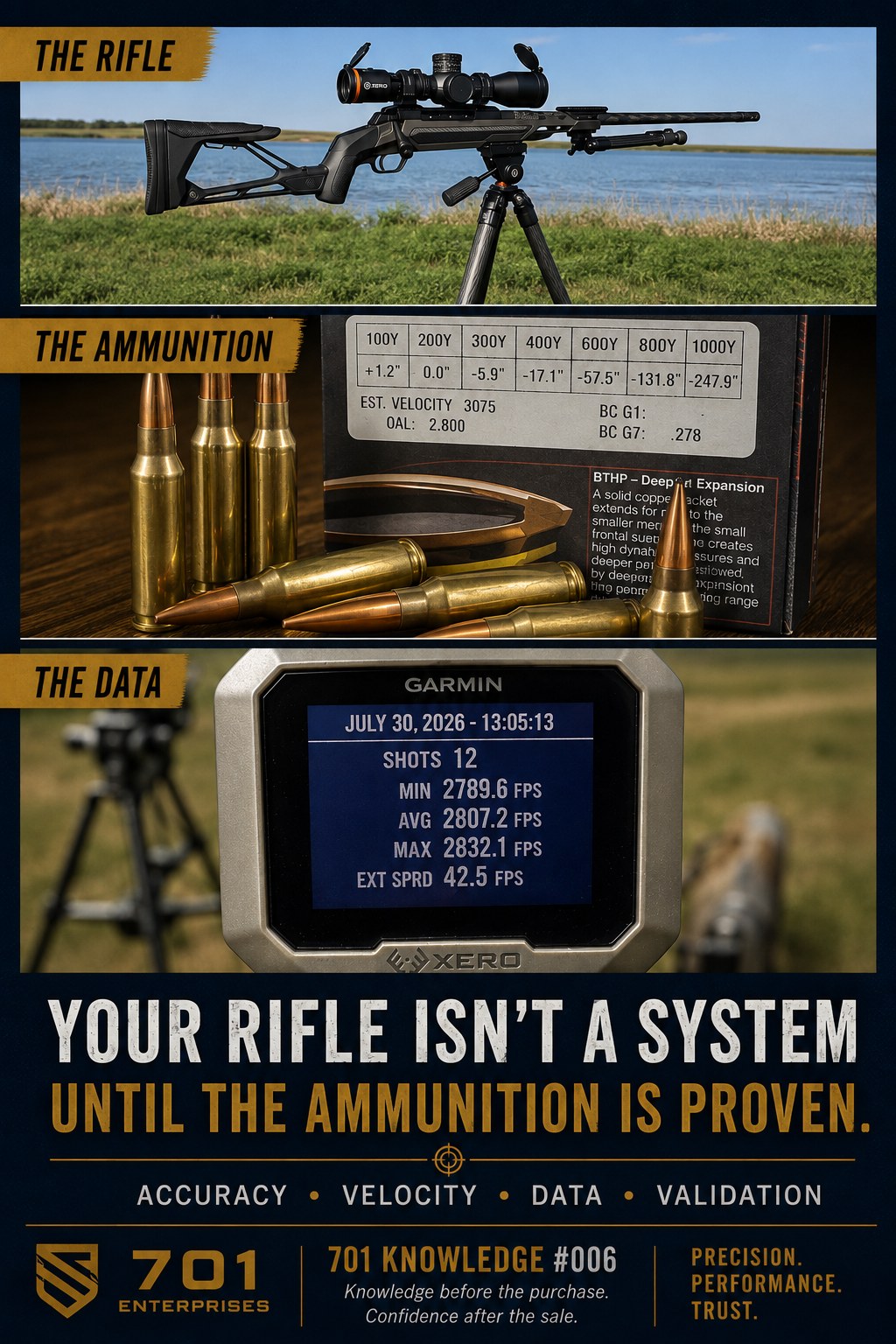
Premium components don't automatically create a proven hunting system. Confidence comes from testing how the complete setup performs together.
Ethical shot distance isn't a number — it's a decision. It isn't determined by your rifle. It's determined by your ability.
It's more than just three shots at 100 yards. A true zero isn't built on luck — it's built on consistency.
Which one is right for your rifle system? There is no universal best — only the setup that best fits what you're trying to accomplish.
Why the best hunters don't choose individual components — they build complete systems designed around one purpose.
Both fire .224-caliber bullets and both are excellent. The better question is: what rifle are you building, and what do you want it to accomplish?
Call, email, or schedule an appointment and we'll walk you through current availability.